For this task, we chose to have a meeting between Brandon
and Tommy about the change in price of a Freddo over the years.
In this preliminary task, me, Emily and Brandon filmed Tommy
walking down the corridor looking all angry because of the price of a Freddo.
In this scene, we filmed a long shot of the door before Tommy walked in the
building. In the second shot, we filmed a medium close up of Tommy walking
along the corridor. In the third shot, we filmed a close up of Tommy's feet as
he would walk past the camera towards the lift. In the fourth shot, we have one
where Tommy is about to enter the lift to up to the next floor. In the fifth
shot, it shows Tommy in the lift pressing the buttons. In the next shot, it is
a medium long shot of Tommy after he exits the lift on the top floor. In the
seventh shot, it is a close up of Tommy's hand opening the door to the office.
In the next shot, we have a low angle shot of Tommy as he walks into the room
with an angry expression on his face. After this we show the 180 degree rule of
Tommy sat at the table opposite Brandon. After we show the 180 degree rule, we
then have a two shot of Brandon and Tommy sat the table discussing the price of
a Freddo. In the final shot, it shows Tommy walking out the room in a mid shot
as the price of a Freddo has not been changed at all. We used all these different kinds of shots because we thought they would be quite good to use as we mainly filmed Tommy walking up corridors and therefore using these different shots for the particular scenes that we filmed. We chose to have the long shot of Tommy walking in the corridor because it seemed like quite an exciting shot to use as you could first off see who was entering the building and you could also see the kind of expression they had on their face, making it easy for you to tell quite quickly whether they were going to be happy, sad or annoyed. As you move on to near the end of the sequence, we used the low angle shot because it would then make Tommy look like quite a large and scary character, which would also work well with the fact that he was looking quite angry when he walked through the two front doors. Friday, 28 November 2014
Thursday, 13 November 2014
Codes and Convetions: Gothic Horror
The Gothic Horror Sub-Genre
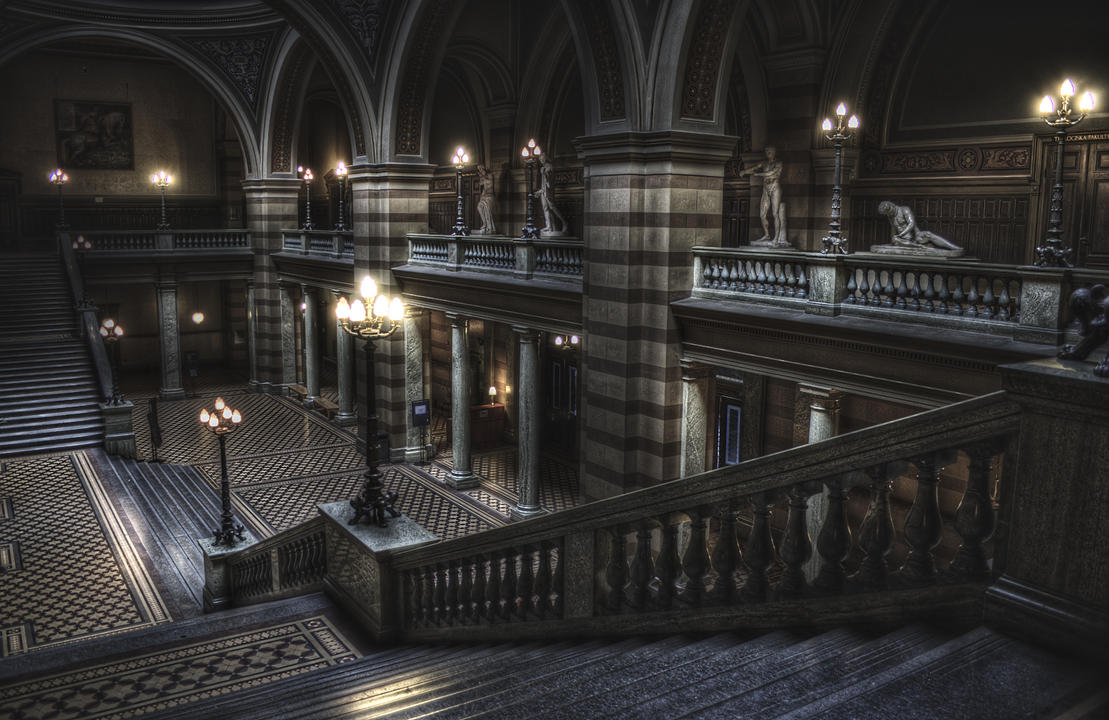
Gothic Horror comes from the popularity of Gothic fiction and novels from the 1800s-present. The sub-genre also reached the height of it's popularity in the late 18th to mid 19th centuries and was a genre of fiction that focused on the darker, irrational and more terrifying aspects of life. Two of the most famous gothic novels are Mary Shelley's 'Frankenstein' in 1818 and Bram Stocker's 'Dracula' in 1897. Gothic fiction is largely dominated by the sub-genre of Gothic Horror and is also a genre or mode of literature that combines fiction, horror and romanticism. It's origin is attributed to English author Horace Walpole, with his 1764 novel 'The Castle of Otranto'.Gothic fiction uses typical elements of wild and desolate landscapes, dark looks and styles - usually low key lighting - graveyards or forests, ruined abbeys - dark and gothic architecture, medieval castles with dungeons, secret passages, winding stair cases, sliding panels and torture chambers, an atmosphere of doom and gloom, heroes and heroines in danger, demonic power, spooky effects with ghosts and spectres and all flesh creeping and spine chilling stories.
Mise-En-Scene
The weather can be used in a number ways and forms, most being misty or stormy. The convention of mist is often used to obscure objects by reducing the visibility to insert a terrifying person or thing. Storms are frequently used to accompany important events. There is also usually a damsel in distress who will, in some way, do something wrong in the eyes of the killer and then end up dying. Gothic Horror films usually use a style of medieval architecture and is usually set in medieval castles or churches. The setting is often dark, gloomy and full of secret chambers, dungeons and hallways.
Gothic fashion is a clothing style marked by dark, mysterious, exotic and complex features. A typical gothic fashion also includes a pale complexion with coloured black hair, black lips and black clothes. Both a male and female Goth would wear dark eyeliner and dark fingernail polish.
A Gothic hero is often an isolated figure who must restore himself to society. A figure of evil, who is sometimes has some kind of relationship with the supernatural, is often in opposition to the hero. Women also play a significant role in Gothic novels are they are depicted as victims of the tyrannical and evil men. Gothic hairstyles have striking shapes and a touch of romanticism, much like a well-cut-jet-black damask frock coat. Character
Characters in Gothic Horror are normally the protagonist/hero, monster/antagonist, victim - who could also be the hero, damsels in distress, marvellous or mysterious creatures, monsters, spirits or strangers and characters with supernatural powers.
Camera Work
With camera work, films are more likely to use:Birdseye/High Angle - As they make the figure underneath look more vulnerable and powerless.
Close Up - As they show the reactions on an actors/actresses face, This shot also shows the emotion and is also used to capture emotion within the scene.
Tracking or Panning Shot - These shots are used effectively in horror films to make out a character is being followed or watched. It could also establish a scene so the audience can see the full view of the shot.
Tilted Angle - Tilt shots add a lot of dramatic tension to shots, and could simplify a supernatural being, for example, pushing or moving the camera. Another use for the tilt shot is to act as though the camera is a victim on the floor, and you are therefore seeing what they are seeing.
Extreme Long Shot/Long Shot - This is a great scene to use to establish horror movies. This shot could put into perspective how deserted a town is.
Low Angle - Low angle shots are very powerful in a way they can emphasize just how scary or intimidating a villain is.
Hand Held Camera Shots - This shot is very often used in horror films to add a sense of reality. It makes the audience feel involved and adds to the horror of the scene as you feel like you are there.
Point of View Shot - This shot is taken from the point of view of the character. This is when the audience is able to see the film through the eyes of one character. This is popular in these types of movies as the audience becomes emotionally attached and more scared as the gun could be directly pointed at them for an example.
Zoom - This shot adds to the dramatic effect and creates element of suspense of fear as you don't know what you are going to see next. It could also be used to zoom into something you wouldn't of spotted before like a supernatural thing.
Editing
In Gothic Horror, you would usually have slow paced editing with lots of straight cuts and fade to blacks. This emphasises the fear and idea of gothic-ness.Sound
For Sound, there would be a lot of eerie silences and non-diegetic stings throughout the film. There may also be some non-diegetic soundtrack to emphasise the sub-genre, this would also increase the fear in the audience.Friday, 24 October 2014
Brief and Initial Ideas
In my group is Brooke Spencer, Emily Rawles, Brandon Playford and Tommy Brading. We have decided to create a video that is on the genre of horror for our main task. For our preliminary task it will be a business meeting between Tommy and Brandon who will be discussing why Freddo's are so expensive. For the preliminary task, we have to involve a character opening the door and crossing a room and then sitting down, it must also include dialogue whilst using a shot reverse shot whilst following the 180 degree rule whilst also including a 'match on action' shot. For our main task, we have to have opening titles along with an opening of a fiction film. It can also be a maximum of two minutes with copyright free music.
Preliminary Task
Business Meeting - Tommy Brading and Brandon Playford
Clothing - Smart - Suit
Setting - Office type scene
With the line "Why are Freddo's 65p?!"
They have an organised meeting in the main Freddo factory.
Main Task
Genre - Horror
Woman in Black - Remake but this time, she is wearing a white wedding dress as she has been killed on her wedding day and then started haunting her killer from that day on. We used the film 'Woman in Black' as inspiration for our task.
Thursday, 25 September 2014
Camera Movement
Pan
Panning is a camera movement that involves moving the camera horizontally to the left or right. With this movement, you can track and object or follow any type of movement. You can do the pan shot either hand-held or on a tripod.
Track
Tracking shots involve the use of dollies to pull the camera around a scene. A tracking shot can be done hand-held but they are commonly shot with dollies.
Crane
A crane shot is usually taken by a camera on a crane. A crane shot is most commonly used to view the actors from above. Most cranes have both the camera and an operator, but some can be operated by remote control. A crane shot is usually used for an emotional or suspenseful scenes.
Tilt
The tilt shot is similar to the pan shot but the tilt shot moves vertically instead of horizontally. The tilt shot can also be done as a hand help or with a tripod. Tilt shots could be used to show a significant character's body from bottom to top.
Camera Editing
Fade
A fade-in shot is when a scene begins in total darkness and gradually lightens to full brightness and a fade out is literally the opposite the opposite of a fade-in and is used at the end of a scene.
https://www.youtube.com/watch?v=Ef1w_ZxpyHk
Straight
A straight cut is an editing technique which is used in almost every films. It allows one shot to suddenly end and the next shot to abruptly come onto the screen. It allows unnecessary footage to be removed or shortened.
https://www.youtube.com/watch?v=c214l2AFfDs
Wipe
A wipe is a type of film transition where one shot replaces another by travelling from one side of the frame to another or with a special shape. Throughout the whole Star Wars sequel, George Lucas used a lot of wipes throughout each movie in quite a few scenes.
https://www.youtube.com/watch?v=4yRjBv1Em4A
Dissolve
A dissolve is a gradual transition from one image to another. A dissolve overlaps two shots for a duration of the effect, usually at the end of one scene and the beginning of the next, but may be used in montage sequences. Sometimes a dissolve is held to indicate that a period of time has passed between the two scenes.
https://www.youtube.com/watch?v=Rt5mcZFYLng
Jump Cut/ Reverse Shot
A jump cut is referred to a cut in film editing, it is referred to when two shots that are of the same subject are taken from camera positions that vary slightly. Putting the two shots together gives the impression of a jump and gives the effect of jumping forward in time.
https://www.youtube.com/watch?v=F-T6zsP3fzw
Camera Shots
Extreme Close Up (ECU)
This camera shot is useful for films like horror and thriller as it could cause viewers to feel scared and uncomfortable at the closeness of the camera to an object or someone's face. This shot can also be used for dramatic effect. Another way it could be used is to make the audience concentrate on something specific, for an example a horror may use an extreme close up of someone's eye to exaggerate their fear.
Close Up (CU)
The close up shot usually shows very little background and would concentrate on the characters face or something specific to mise-en-scene. The intentions for this camera shot is usually that the main focus is the characters face so the background would then be blurred out so you would not distract yourself and look to something else on screen.
Medium Long Shot (MLS)
This shot shows the character from the knee upwards, this shot is normally used for dialogue scenes or a scene which has a bit of action involved. In the medium long shot, there is always minimal background as it could have already been shown previously in a film, video etc.
Long Shot
A long shot is usually used because it is able to show the whole characters body from head to toe and you can see them quite clearly. Although you are able to see the whole characters body, you are also able to see a little bit of the background as well to show you what is around in the particular shot/scene. This can be used to show a characters body language or costume which could tell us something about their character.
Extreme Long Shot (ELS)
This shot can be take from quite a way away because it usually used as a shot to set the scene and show you where the film/video is set. This shot is also quite popular for an action/war film especially for a thrilling action scene of fighting.
Two Shot
This shot is used to have a comfortable shot of just two people. This shot is good for showing the relationship between two characters. This shot can also be a good way to follow the interaction between two people without getting distracted by the background or surroundings near-by.
Over the Shoulder Shot (OTSS)
The Over the Shoulder Shot is used to help establish the position of each person on-screen, it is also used to look at the other person from another persons point of view. This shot is quite popular in a shot between two people having a conversation as it would switch between the two each time they spoke. This means we can concentrate on their facial expression when speaking and interpret their dialog.
High Angle Shot (HAS)
For a High Angle Shot, the camera is elevated above the action using a crane to give an overview of what is happening. High Angle Shots make whatever is below look smaller, the object/character often gets swallowed up by the setting as they are looking quite small and could start to blend in with the setting.
Point of View Shot
This shot shows a view from one particular characters perspective, like, what they see all around them. It is usually edited so it looks like you can see out of their eyes or you yourself are in the frame and it what you can see.
Subscribe to:
Comments (Atom)